Everyone nowadays has a question on his/her mind is “How to build AI agent from scratch in 2026” because Artificial Intelligence is no longer limited to chatbots or static models or traditional models. In simple terms, AI agents are no longer experimental projects but they are production-ready systems driving automation, decision-making, and productivity across to all those industries that depend on data. In 2026 and also in the future, all organizations in the US, UK, Canada, Australia, and the EU are actively deploying AI agents for customer support, analytics, finance, healthcare, and SaaS platforms.
This guide will explains how to build an AI agent from scratch in 2026, even if you are starting as a beginner or from any level. In this you will learn the complete agentic AI architecture, tools, frameworks, real-world use cases, and step-by-step procedure and process which is used by global startups and enterprises across the US, UK, Canada, Australia, and the EU.
If you are a student, developer, or business leader with a goal of career growth, automation, or launching an AI product, this roadmap will help you to build AI agents that are scalable, reliable, and monetizable. lets acces every points using table.
Table of Contents
What Is an AI Agent?
An AI agent is a system which will perform the below activiites:
Perceives information (text, APIs, databases)
Reasons using AI models (LLMs like GPT)
Acts autonomously (tools, APIs, workflows)
Learns or adapts over time
Unlike traditional AI models the AI agents can make decisions and opinions, break tasks into actionable ways or steps, and interact with external systems.
Real-World Examples
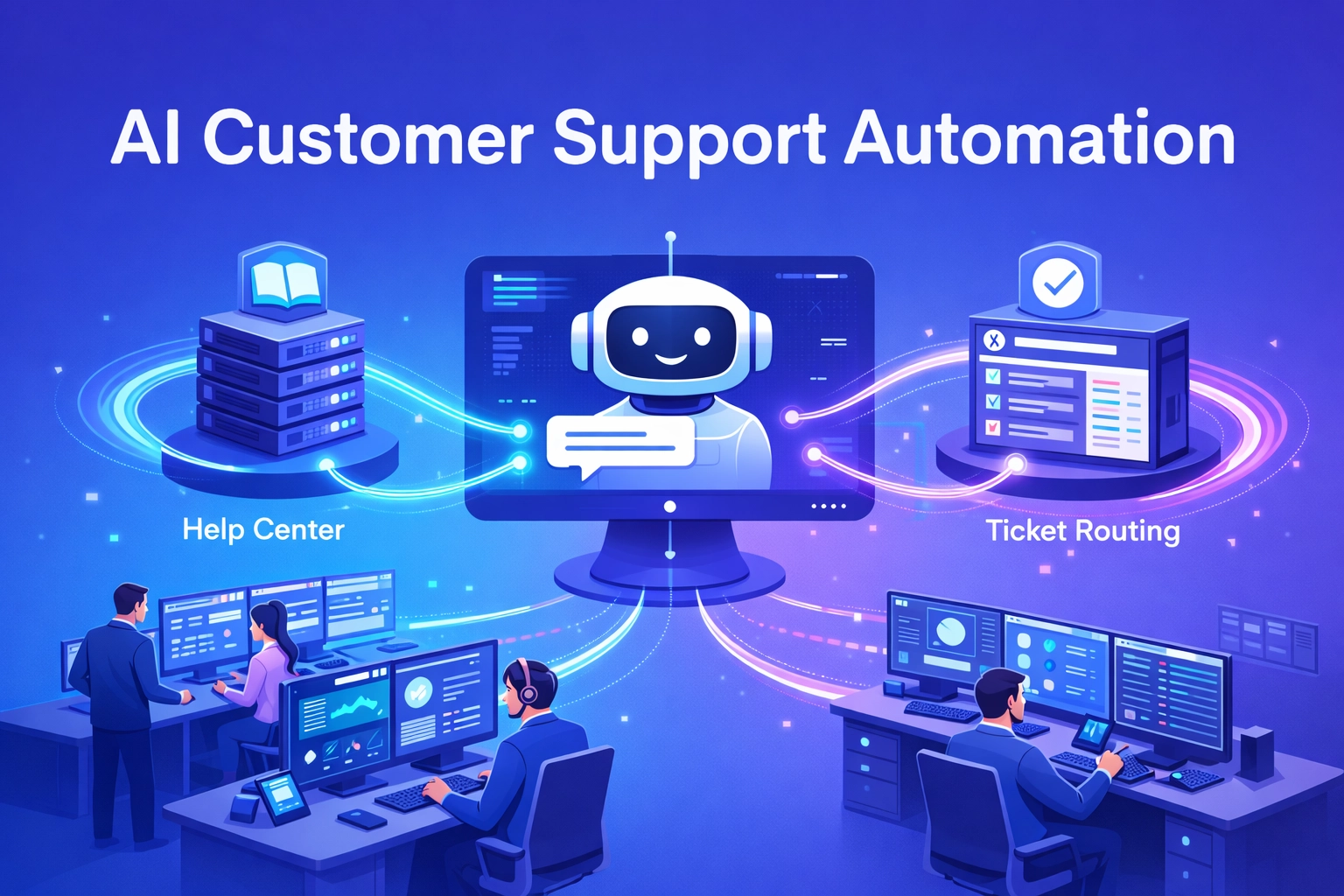
AI customer support agents
Autonomous trading bots
AI research assistants or exploration sidekicks
Workflow automation agents
AI Agent Architecture Explained
To understand the complete architecture components of an AI agent which is essential before you build. Here are the important components mentioned below:
These tools & Tech Stack are widely used across US and EU AI startups, for making them high value skills for monetization and careers or in simple for professional life in AI ecosystem.
Step-by-Step: How to Build AI Agent from Scratch 2026
Here is a complete proven 10-step by step architecture aligned with modern tools like LLMs, LangChain, vector databases, and UI frameworks.
Step 1: Define the Agent’s Role and Goal
Each and every successful AI agent all are starts with complete clarity.
So ask from yourself:
What problem will the agent solve?
Who will use it?
What output should it generate?
Example: A medical AI assistant that reads the X-rays, summarizes findings, and explains the results in plain English.
Clear goals of the agent will improve accuracy, safety, and enterprise trust, which are essential.
Step 2: Design Structured Input & Output
AI agents must behave like APIs, not chatbots.
Best practices:
Use JSON schemas or Pydantic models
Define strict input/output contracts
Avoid unstructured responses
Tools Used Globally
Pydantic AI
LangChain Output Parsers
This structure will make an AI agents reliable in enterprise and SaaS environments.
Step 3: Tune Behaviour & Add Protocols
Before using the Agent behaviour must be controlled.
Key techniques:
Role-based system prompts
Prompt tuning or prefix tuning
Model Context Protocols (MCP)
Popular Tools
GPT-4 / Claude
Prompt tuning frameworks
This will ensures your AI agent follow the business rules, compliance, and ethical boundaries.
Step 4: Add Reasoning and Tool Use
In the modern era and advancement of the computer era the modern AI agents must think and act based on the intent.
Capabilities include:
ReAct (Reason + Action)
Chain-of-thought reasoning
Tool execution (APIs, databases, web search)
Common Tools
LangChain
OpenAI Tools
ReAct framework
This step will transforms the AI model into a decision-making system which is best for any type of user intent to deal them properly.
Step 5: Structure Multi-Agent Logic
In most cases and simply sometime, the complex tasks need multiple AI agents working together.
Example:
Planner agent
Researcher agent
Reporter agent
Frameworks Used
CrewAI
LangGraph
OpenAI Swarm
Now multi-agent systems are widely used in finance, research, and enterprise analytics all of these have complex tasks that are too tough sometime to handle multiple task at the same time so the best AI agent can do it without any hesitation.
Step 6: Add Memory & Long-Term Context (RAG)
Without memory, agents forget.
Add:
Conversational memory
Summary memory
Vector-based retrieval (RAG)
Popular Memory Tools
FAISS
ChromaDB
LangChain Memory
Zep
Memory enables personalization and long-term intelligence to the AI agent, which is critical for SaaS products.
Step 7: Add Voice or Vision (Optional)
In this day by day advancement in an AI ecosystem the Advanced AI agents can:
Speak (Text-to-Speech)
See (Image understanding)
Technologies
ElevenLabs / Coqui (Voice)
GPT-4o / LLaMA Vision (Images)
This is common in healthcare, accessibility, and customer experience platforms and manu more organizations.
Step 8: Deliver the Output
The output of the agentic AI must be:
Readable
Parsable
Consistent
Formats:
JSON
Markdown
PDF
Tools
Pydantic AI
LangChain Parsers
Then the clean outputs improve the API integration and monetization potential.
Step 9: Wrap the Agent in a UI
The best and good UI turns your agent into a product.
Common front-end tools:
Streamlit
Gradio
FastAPI
This is where the new AI agents become sellable SaaS products or internal tools.
Step 10: Evaluate and Monitor
Continuous improvement for any agentic AI is mandatory.
Track:
Accuracy
Latency
Reliability
User feedback
Evaluation Tools
OpenAI Evaluation API
MCP Logs
Custom dashboards
Monitoring to builds trust, safety, and long-term performance in industries.
Global Adoption & Market Impact
According to the McKinsey, the AI-driven automation could contribute over $4 trillion annually to the global economy. That’s why the AI agents are already deployed in different industries wisely like:
In Fintech for the Risk analysis & fraud detection
In Healthcare, used as AI diagnostic assistants
In SaaS for the Customer onboarding automation
In E-commerce for the AI shopping assistants
In Enterprise IT for the Workflow automation
Career & Monetization Opportunities
The Building AI agents will unlock high-RPM career paths:
To build trustworthy AI agents the follow and take care of these:
Log decisions
Limit autonomous permissions
Ensure data privacy (GDPR compliant)
Add human-in-the-loop controls
These practices are crucial for enterprise trust and compliance.
Conclusion
In this modern age the learning how to build an AI agent from scratch in 2026 and in the future positions you at the forefront of artificial intelligence innovation. AI agents are no longer optional but now they are becoming the backbone of automation, analytics, and digital products across worldwide and globally.
By following this structured, step-by-step roadmap, you can build a good and best AI agents which will be scalable, compliant, and production-ready. Whether your goal is to career growth, freelancing, or launching an AI SaaS product, AI agent development offers unmatched opportunities in the global tech economy.
The future belongs to intelligent systems, and now you know how to build them.
FAQ: AI Agent Development (Featured Snippet Ready)
How do I build an AI agent from scratch in 2026?
Steps to Build an AI Agent: => Learn Python (Optional but mandatory) => Define goals => Use an LLM => Add tools and memory => Deploy with a UI => Monitor continuously
Should beginners learn AI agent development?
Yes without any hesitation every person can learn AI agents which is the combination of AI, automation, and software engineering, making them future-proof skills.
Which framework is best for AI agents in 2026?
These frameworks are best for AI agents: => LangChain (flexibility) => CrewAI (multi-agent) => OpenAI Assistants API (managed)
Are AI agents used in real businesses or Can lead Digital Business?
Absolutely yes they are used in finance, healthcare, SaaS, and enterprise automation worldwide like US, UK, EU, and Australia use AI agents daily.
Can AI agents replace jobs?
AI agents augment productivity, but skilled professionals who build and manage them remain essential.