Table of Contents
Intro about Scaling Multi-Agent Systems
When we talk about the term scaling, basically, we are talking about adding devices to a system. But when it comes to scaling multi-agent systems, so it is not just about adding more agents to the system. It actually changes the complete way of the whole system on which it works. Something that works fine with 10 agents may not work with 100 or 1,000 agents. A lot of teams in the organization do not really understand this change. That is why they have problems with performance, and things do not work together as they should, and it costs more money.
This guide is going to explain what really happens when multi-agent systems are scaled up and how to deal with the problems that come up with scaling agent systems.
Quick Answer
Scaling multi-agent systems means handling the coordination, the communication, and the reliability as the agent count grows.
- Small systems fail due to inefficiency
- Large systems fail due to complexity and coordination overhead
- Success requires prioritizing bottlenecks, not just adding infrastructure
The Reality of Scaling: What Changes as Agents Increase
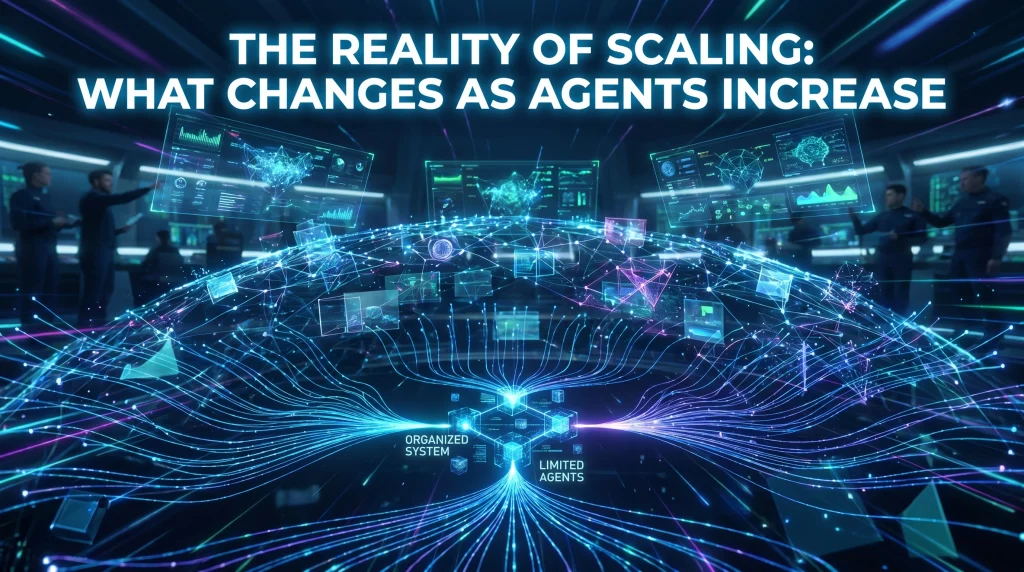
Most teams treat scaling as a linear problem, such as that more agents, more computation will be done in a sequence. But the real issue is that agent systems are not in a linear form; basically, they are present in network form, and networks get exponentially harder to manage as nodes multiply and grow more and more.
Here is a quick breakdown of how the behaviour changes at each stage.
10 → 100 Agents: Coordination Overhead Begins
At this stage, the system still feels manageable because the limits of the system are not so huge. But this is where coordination overhead quietly begins. Just like that, agents start competing for shared resources such as memory, API call limits, and task queues.
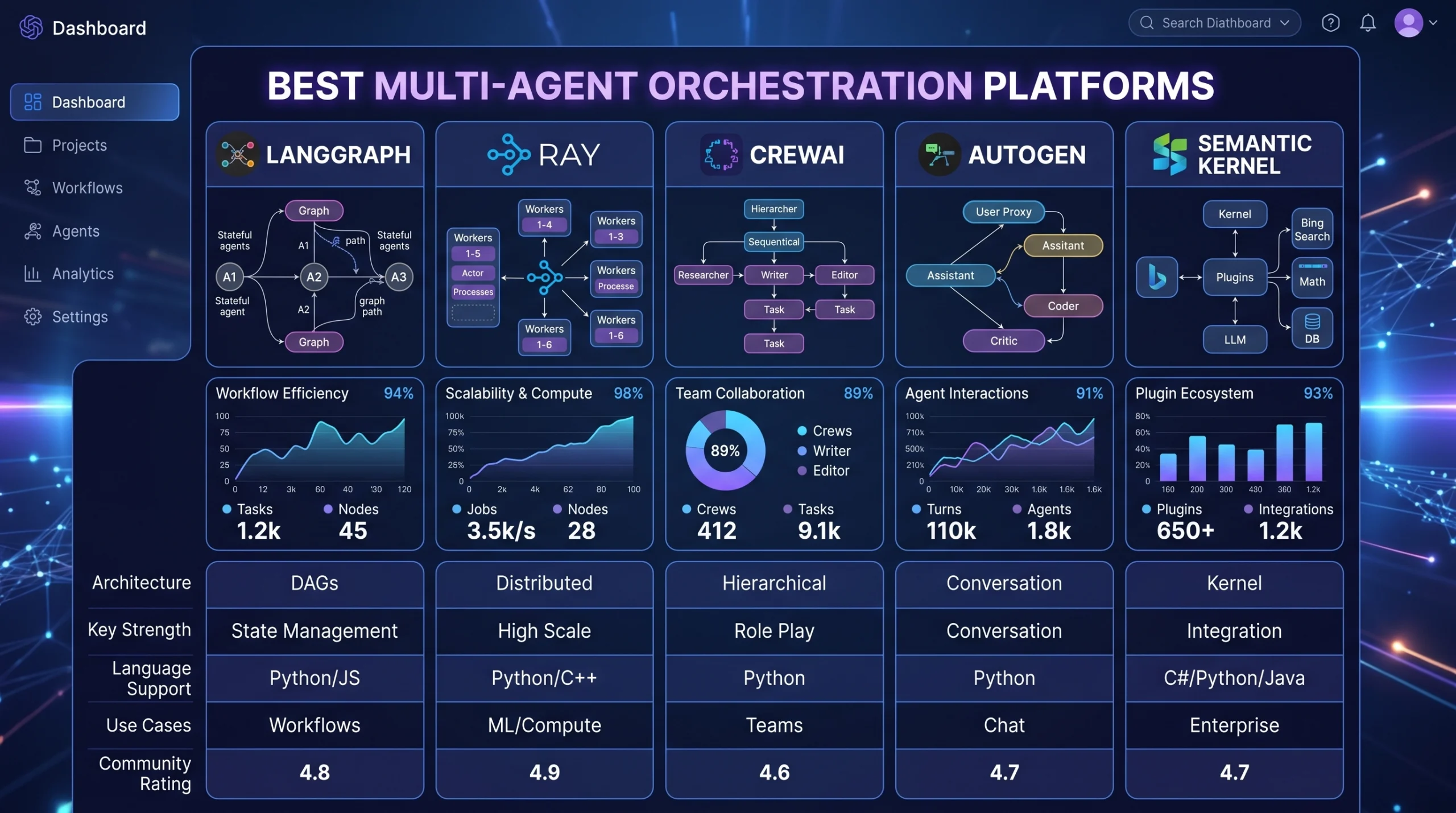
In practice, teams using frameworks like LangGraph or CrewAI often notice delayed responses and task conflicts appearing around the 50-agent mark. We feel that the system works, but it is no longer efficient.
100 → 1,000 Agents: Communication Becomes Bottleneck
At this scale, communication is no longer just a side concern; it becomes the primary constraint at this scale. Every agent needs to receive instructions, send results, and coordinate with others. In the results, the number of messages can grow faster than the number of agents.
The real issue is not raw compute; it is the coordination layer struggling to keep pace.
In Practice: Why Scaling Is Non-Linear
A common mistake is assuming that doubling agents will give a result of double throughput. In many cases, doubling agents while keeping the same coordination structure actually reduces effective output per agent. This is the non-linearity trap; the overhead grows faster than the useful work.
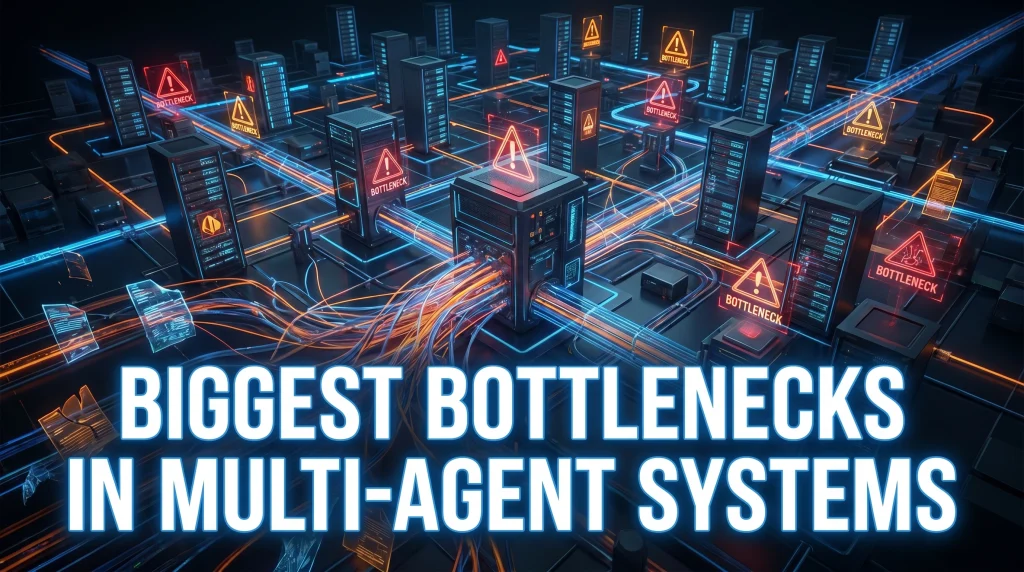
Biggest Bottlenecks in Multi-Agent Systems
Not every bottleneck in the AI agents’ systems is equal. To know which ones to fix first saves time and prevents wasted infrastructure investment.
1. Communication Overhead vs. Computation Limits
When teams work together, they usually run into problems with communication first. Communication overhead is almost always the first bottleneck that teams face in multi-agent systems. Basically, it is not the computer itself that fails, but it is the message-passing layer.
In systems using shared message buses or centralized orchestrators, every new agent adds to the volume of messages flowing through that central point.
Computation limits (GPU, CPU) are secondary. Fix communication first.
2. Task Coordination Delays and Conflicts
When multiple agents are assigned overlapping tasks or when task dependencies are not clearly defined, delays and conflicts pile up. This is especially common in systems without a proper task dependency graph.
In LangGraph-style workflows, poorly defined edges between nodes are a frequent source of this problem.
3. Resource Contention (Memory, Compute, API Limits)
- At scale, multiple agents may be calling the same external APIs simultaneously.
- Rate limits from LLM providers (like OpenAI or Anthropic) become a hard constraint.
- Memory for storing agent context also compounds quickly.
- If communication grows → the system slows exponentially.
- But if API rate limits hit → the system can halt entirely.
Failure Scenario: What Breaks First in Real Systems
Understanding real failure modes is more useful than reading a generic list of risks. Here is what typically happens.
A Common Failure Pattern: Message Overload
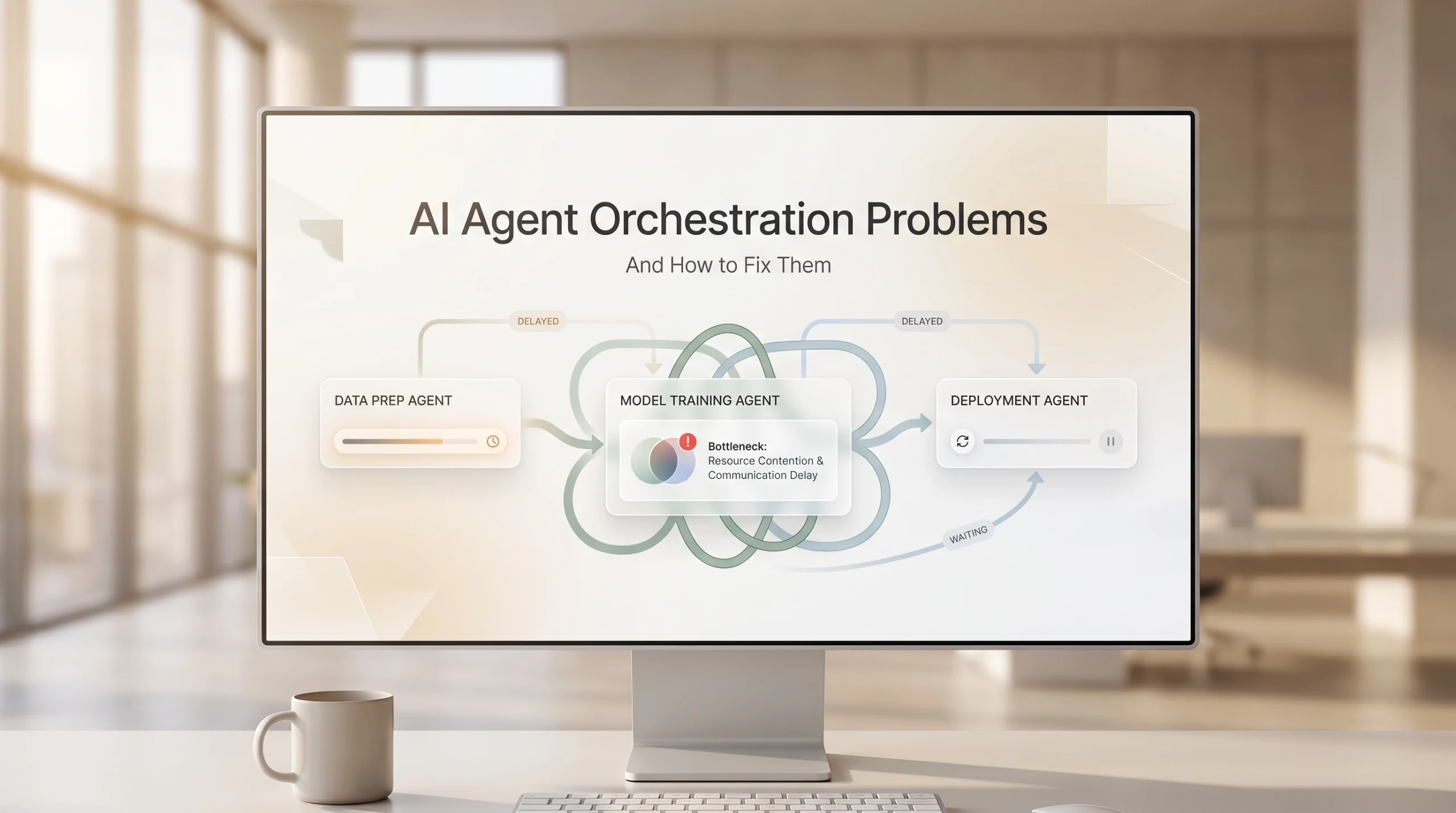
Imagine a multi-agent pipeline with 200 agents, which are all reporting status updates to the main central orchestrator after every few seconds. The orchestrator’s message queue fills up faster than the ability of the orchestrator. Then all the Agents begin waiting for the acknowledgment before proceeding. So, the whole system slows to crawl, not because of any single agent failure, but because the coordination layer is stressed.
This is one of the most common scaling failures which teams encounter in the production.
Cascade Failures: One Agent Failure Impacts Others
In tightly coupled systems, a single agent failure can propagate and may affect the working of other agents.
For instance:
- If Agent A is responsible for pre-processing data on which Agents B and C depend for its working, and Agent A crashes, both B and C either stall or produce errors.
Without proper isolation between the agents, the failure of one agent becomes a system-wide incident.
In Production Systems: Debugging Becomes Harder Than Building
Teams using AutoGen or LangChain-based multi-agent setups often discover this the hard way: at scale, tracing the root cause of a failure across dozens of simultaneous agent interactions is significantly harder than the initial build. Distributed tracing tools become essential, not optional.
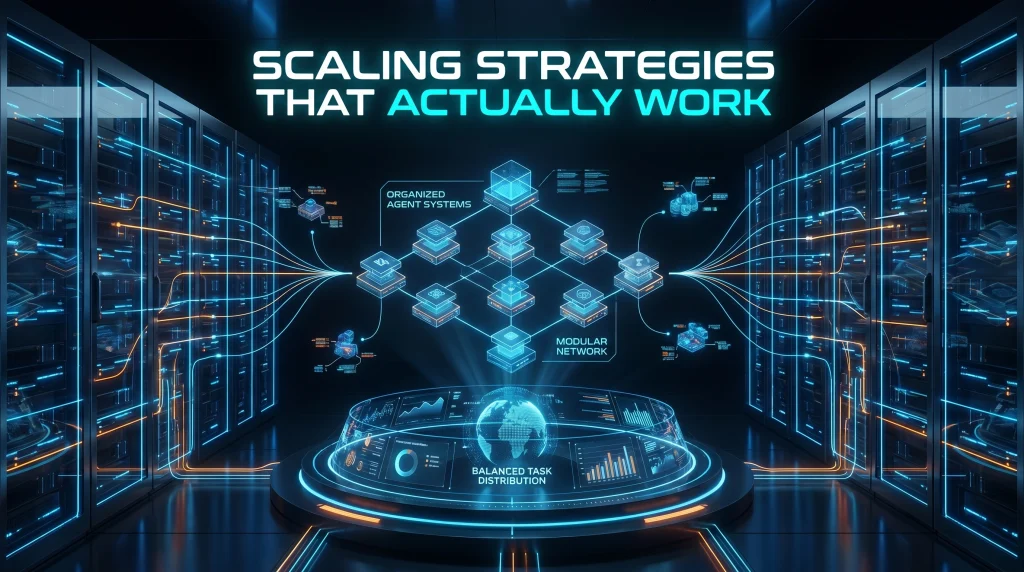
Scaling Strategies which actually work
There is no one-size-fits-all for a scaling strategy. Each approach comes with the real trade-offs that the teams need to weigh upfront.
Decoupling of Agents means reducing dependencies
The most effective scaling move is reducing how many agents depend on each other. Loosely coupled agents operate independently and communicate only through well-defined interfaces or message queues, which are far easier to scale.
The trade-off: decoupling reduces real-time coordination. If agents need a live shared state, full decoupling may not be possible.
Hierarchical Coordination vs. Flat Systems
Flat systems, where all agents are coordinating with each other and do not scale, while Hierarchical systems, in which a small number of supervisor agents coordinate groups of worker agents, and scale much better.
The trade-off: The hierarchical systems add management complexity and can create new bottlenecks at the supervisor nodes.
Load Distribution and Task Partitioning
Splitting tasks into independent partitions so that each agent or group handles a defined slice, which significantly reduces coordination overhead. This is similar to how distributed databases partition data.
The trade-off: partitioning works well for parallelizable tasks. Tasks cannot be partitioned easily with strong sequential dependencies.
Trade-off: Flexibility vs. Control
The more control you add to the system (such as centralized routing, strict task queues, enforced ordering), the system becomes less flexible. When you allow more flexibility, the harder it is to guarantee consistent behaviour at scale. Teams need to decide which matters more for their specific use case before they scale.
Reliability and Fault Tolerance at Scale
A system which performs very well under the normal conditions but collapses under the critical conditions, or when the load grow, its means that it is not production-ready.
Handling Agent Failures Without System Collapse
Design the system for failure from the start or at the beginning. Each agent should be treated as a component that can fail at any time. This means that no single point of failure, isolated error boundaries, and clear fallback paths.
In practice, systems using Kubernetes-based agent deployments handle this better than those running agents as monolithic processes.
Retry Mechanisms and Fallback Strategies
Every agent-to-agent interaction should have a defined retry policy.
- If Agent A fails to respond within a set timeout, the system should have a fallback, either a simpler backup agent or a graceful degradation path.
LangGraph’s node-level error handling and AutoGen’s agent recovery patterns are two approaches teams use in production for this.
If Reliability Matters → Design for Failure First
The most reliable large-scale multi-agent systems are those built on the assumption that failure is inevitable. Rather than adding fault tolerance as an afterthought, teams that design it into the architecture from the outset recover significantly faster and maintain higher uptime.
Cost and Performance Trade-offs at Scale
More agents do not always mean better results. This is one of the most underappreciated insights in multi-agent system design.
More Agents ≠ Better Performance
Adding agents when the coordination architecture has not been addressed leads to diminishing returns and often negative returns. Each added agent increases the coordination burden on the system, which can slow overall throughput even as raw compute increases.
Infrastructure Cost vs. System Efficiency
Running 500 agents in parallel has a real dollar cost.
- LLM API calls,
- Cloud compute,
- Memory, and
- Logging infrastructure all adds up.
If 300 of those agents are idle most of the time and waiting for the coordination signals, then here the system is burning money with no performance gain.
Teams should profile utilization before scaling horizontally.
Enterprise vs. Startup Scaling Considerations
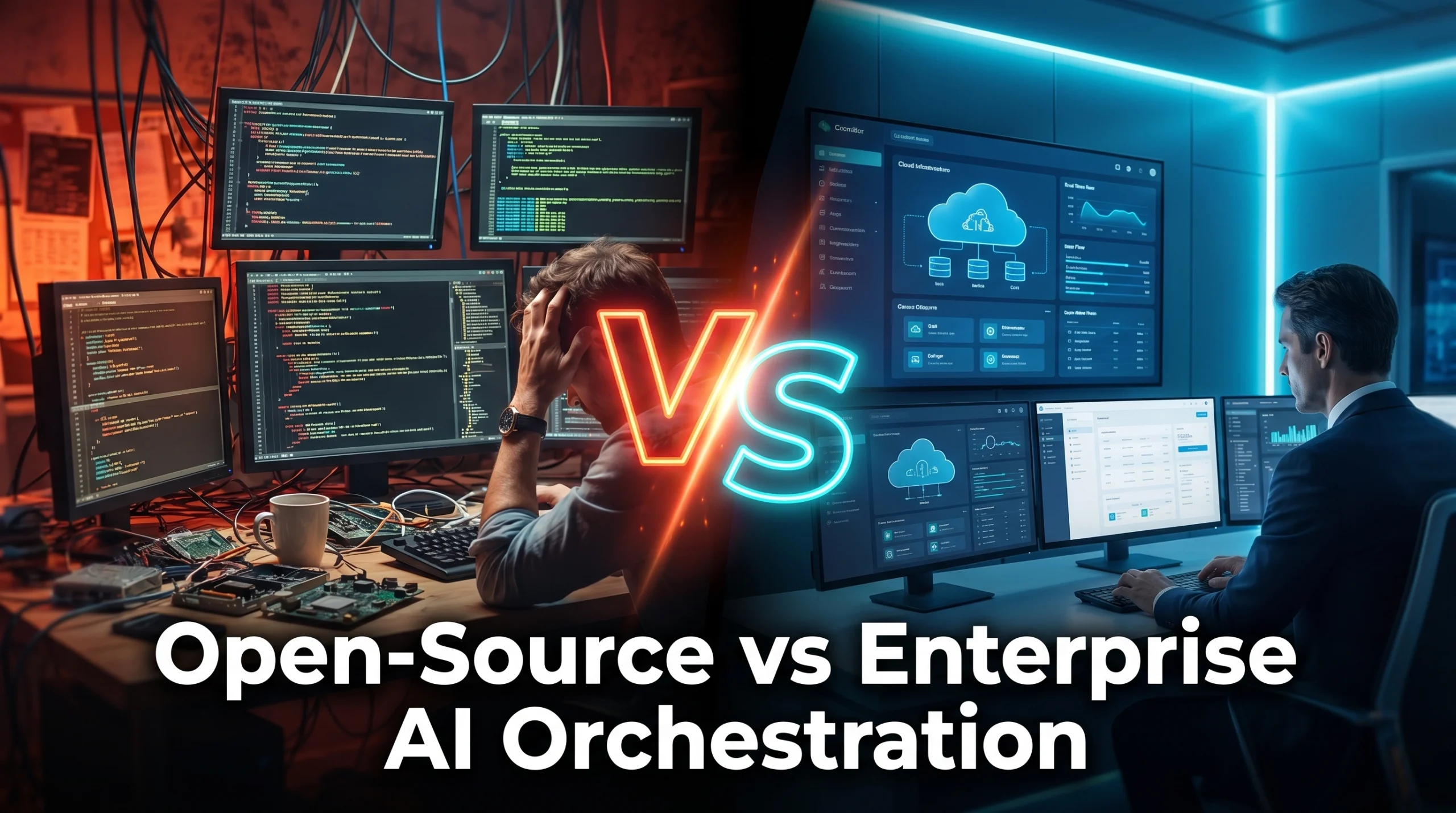
Enterprise teams typically have the infrastructure maturity to scale carefully and wisely:
- Dedicated DevOps, observability tooling, staged rollouts.
Startups often scale too fast, but hit a wall and have to re-architect mid-flight. The less mature the infrastructure, the more important it is to scale conservatively and instrument early.
Decision Framework: How to Scale Without Breaking Your System
Use this as a practical reference when problems appear.
If the System Slows → Optimize Communication
Before adding more agents or compute, audit the communication layer.
- Are agents over-reporting?
- Is the message queue saturated?
- Are there unnecessary synchronous dependencies?
First, fix the communication bottleneck. Then reassess whether more agents are actually needed.
If the System Fails → Improve Fault Tolerance
If failures are cascading, it means that the architecture lacks of proper isolation.
- Add error boundaries,
- Retries, and
- Fallback agents before scaling further.
Scaling a fragile system only makes it fail faster and harder.
If Cost Rises → Reduce Unnecessary Agents
High cost with flat or declining performance is a sign of inefficient agent utilization. Profile of which agents are actually doing work vs waiting. Remove or consolidate idle agents.
Rule of Thumb: Scale Architecture, Not Just Agent Count
The single most important principle is:
- Before adding agents, make sure the coordination layer, fault tolerance, and observability infrastructure can support the next stage. If not so fix those first.
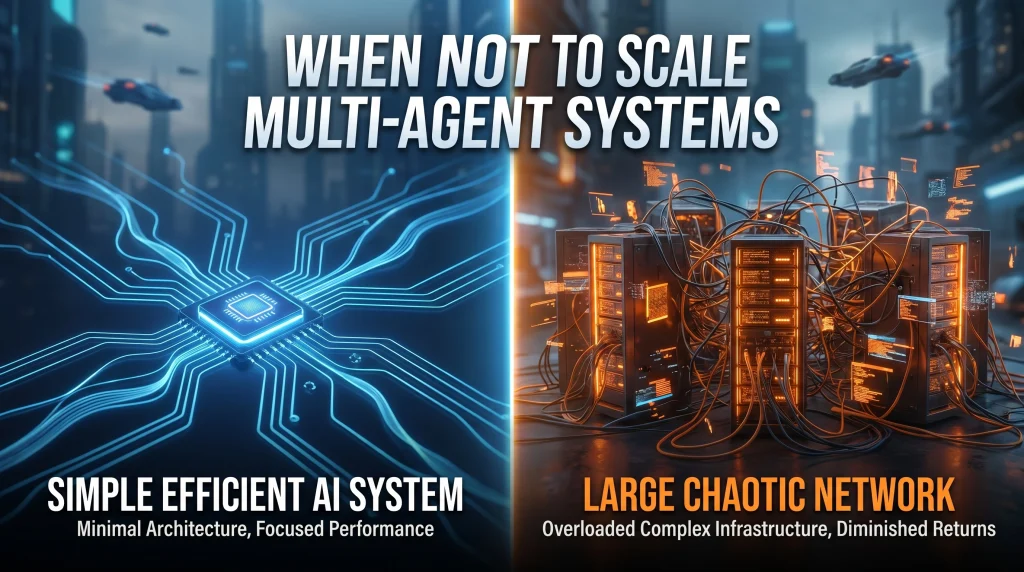
When NOT to Scale Multi-Agent Systems
This topic is not really discussed, but it is one of the most and important valuable insights for those teams that build real-world systems.
When Coordination Cost Outweighs Benefits
If handling and coordinating many agents takes more effort than the benefits which they provide, then a multi-agent system is not a good choice for you. This often happens when tasks must be done step-by-step or when agents need to constantly share large amounts of information.
When Simpler Systems Perform Better
A single well-designed agent with the right tools can often do a better job than a complex multi-agent setup for the specific tasks. Many teams make systems more complicated than necessary when a simpler design could achieve the same results with less effort and at less cost.
Contrarian Insight: Smaller Systems Can Be More Efficient
The teams that get the most value from the multi-agent systems are not the ones which running the most agents, they are the ones which running the right number. Fewer, more capable agents with clear responsibilities consistently outperform sprawling systems where responsibility is fragmented.
Common Mistakes Teams Make When Scaling
Knowing what not to do is just as important and valuable as knowing what to do.
Scaling Agents Before Fixing the Real Problem
This is the most common mistake. Teams keep adding more agents and hoping to improve the performance, but do not fix the real issue, like poor coordination or communication issues. The result is a larger, slower, and more expensive system with the same root problem.
Ignoring Monitoring and Observability
In production systems, you cannot solve problems if you cannot see what is happening. Multi-agent systems need proper agent-level tracing, task-level logging, and system-wide health metrics. Tools like LangSmith (for LangChain-based systems) and OpenTelemetry-compatible setups are essential at scale.
Without proper monitoring, teams end up troubleshooting without clear information, which becomes very difficult as the system grows.
A Common Failure Pattern: Over-Engineering Too Early
Some teams add advanced features like:
- Complex coordination,
- Retry mechanisms, and
- Distributed tracing before the system actually needs them.
This wastes time and creates extra technical problems later. It is better to grow the architecture step by step, based on the actual number of agents and system complexity.
FAQ
Why is scaling multi-agent systems difficult?
Scaling is difficult because complexity grows faster than system size.
More agents increase coordination overhead
Communication becomes a bottleneck
Small inefficiencies become major failures at scale
What is the biggest bottleneck in multi-agent systems?
The biggest bottleneck is usually communication overhead.
Messages increase exponentially with agents
Delays slow down decision-making
In practice, communication limits scalability more than compute
How do you improve scalability in multi-agent systems?
Focus on reducing dependencies and coordination load.
Decouple agents where possible
Use hierarchical structures
Optimize communication patterns instead of adding more resources
When should you not scale a multi-agent system?
You should not scale when complexity outweighs benefits.
If performance decreases with more agents
If the coordination cost is too high
If simpler systems can solve the problem
What happens when multi-agent systems fail at scale?
Failures often cascade across the system.
One agent failure affects others
System becomes unstable
Debugging becomes extremely difficult
Conclusion
Scaling multi-agent systems means actually less about the growth and more about the control. As systems expand, the coordination and reliability become the real challenges, but not computation.
The most effective approach is not to scale blindly, but to identify bottlenecks, design for failure, and evolve the system architecture step by step.
The teams that succeed at scale are not the ones with the most agents; basically, they are the ones who understood their system’s failure modes before those failures became the production incidents.
Internal Links
- Architecture of AI Agent Systems (Explained Clearly): How Agent Architecture Affects Scaling Decisions
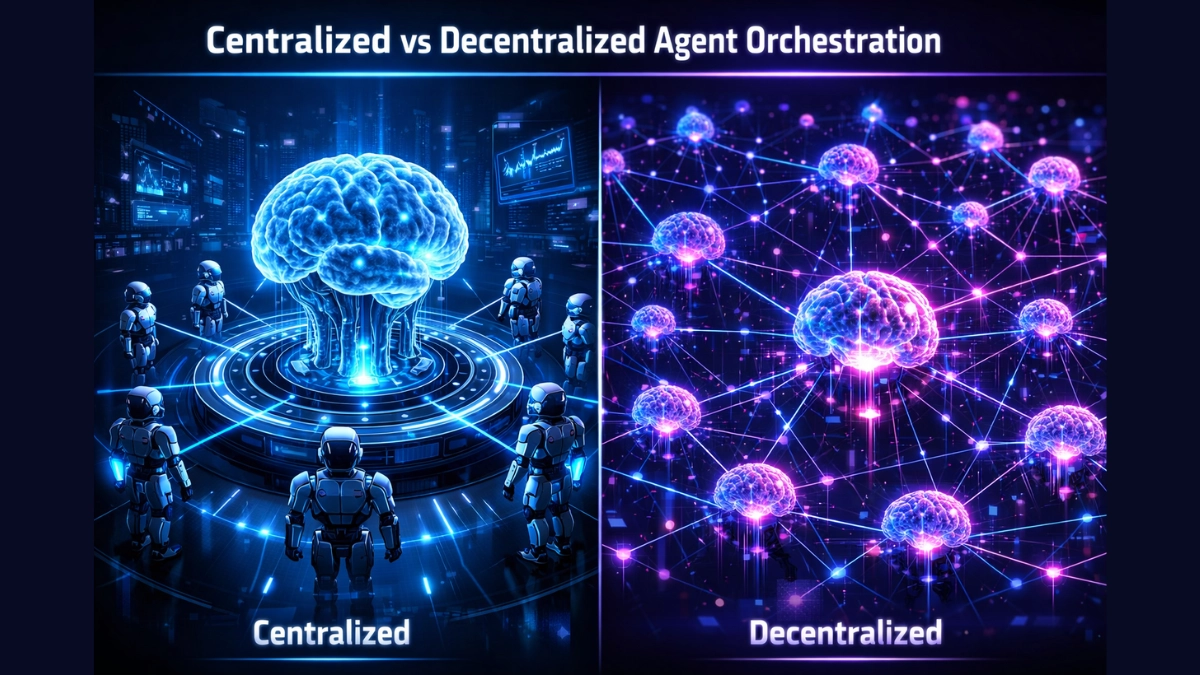
- Centralized vs Decentralized Agent Orchestration: coordination structure tradeoffs at scale